Laboratory Assessment of Wheat Cultivar
Susceptibility to Angoumois Grain Moth (Sitotroga cerealella)
Infestation
1Fawad Khan, 1Farman Ali, 2Imtiaz
Ali Khan, 3Farhanda Manzoor, , 1Inam Ullah, 4Bahar
Uddin and 5H.A. El-Sadawy
1 Department of Entomology, Abdul Wali Khan
University, Marden, Pakistan.
2 Department of Entomology, The University of
Agriculture, Peshawar, Pakistan.
3 Department of Scientific Research and
Development Minhaj University, Lahore, Pakistan.
4 Department of Zoology, Shaheed Benazir
University, Upper Dir, Pakistan.
5Department of Parasitology and Animal Diseases,
Veterinary Institute, National Research Centre, Dokki, Egypt.
 1Corresponding
author: Fawad Khan medicalentomologist94@gmail.com
1Corresponding
author: Fawad Khan medicalentomologist94@gmail.com
Received:
27-11-2024, Accepted: 3-12-2024, Published
online: 20-12-2024
.
Abstract
The 2023
study from the Agricultural University Peshawar’s PBG Laboratory explored the
effects of three wheat varieties—Abaseen-2021, Zarghoon-21, and Taskeen-2022 -
on the biological behavior of the Angoumois grain moth S. cerealella.
Key metrics included progeny development, adult weight, emergence timing, and
longevity under "No-Choice" and "Free-Choice" ovarian
selection. Abaseen-2021 showed the highest support for moth development, with
maximum progeny, weight, and longevity, especially under No-Choice conditions.
Taskeen-2022, however, showed the least support for pest proliferation. The
results underscore the importance of wheat variety in pest management
strategies.
Keywords: Wheat varieties,
S. cerealella, Progeny development, Adult longevity, Ovarian selection,
Pest management.
Introduction
Triticum aestivum has always been the source of food for
centuries. In Western nations, varieties like bread wheat (Triticum aestivum)
and durum wheat (Triticum durum) are grown to provide essential
nutrients and energy. Today, China and India are the leading wheat-producing
countries; this is primarily because wheat uses less water than other crops (Igrejas
and Branlard, 2020). It is now one of the most important ingredients in a
range of processed foods found in modern predominantly urban environments. As
an important commodity traded internationally, wheat serves a key role in food
security and the economy. In Pakistan, wheat is a foundational food item and is
grown largely in Punjab, Khyber Pakhtunkhwa, Sindh, and Balochistan provinces.
As per the Federal Committee on Agriculture (FCA), the wheat output for the
2022 - 2023 season has been estimated at 26.8 million Tonnes (TNI, March 13th,
2023). The area planted under wheat in the 2021-2022 season was approximately
9.2 million hectares with harvesting of about 27.5 million tonnes (PBS
2021-2022). For instance, an area of 0.76 million hectares was cultivated with
wheat in Khyber Pakhtunkhwa yielding 1.4 million tonnes (Ali et al.,
2022).
In
Pakistan, wheat constitutes a leading food item whose areas of cultivation are
predominantly in Punjab, Khyber Pakhtunkhwa, Sindh, and Balochistan provinces.
As per the Federal Committee on Agriculture (FCA), the total estimated
production of wheat for the harvest period between 2022 and 2023 was 26.8
million tonnes (TNI, June 2023). For instance, during the 2021-2022 crop
season, about 9.2 million Ha were put aside for growing wheat which yielded
approximately 27.5 million tonnes (PBS 2021-2022). For example, in Khyber
Pakhtunkhwa, about 0.76 million Ha were used to grow wheat resulting in a yield
of about 1.4 million tonnes (Ali et al., 2022).
Along
with that, food and vegetable produce undergo structural changes over time thus
requiring adequate storage to reduce spoilage. Thus, effective storage is meant
to ensure that food remains fresh and retains its quality until it gets to the
market. It is possible for stored products’ quality, different kinds as well as
their quantities to deteriorate significantly without proper storage conditions
(Sisman and Albut, 2010). It is estimated that abiotic factors account
for about half of crop yield losses with high temperatures causing 20%, low
temperature 7%, salinity 10%, drought 9% while other reasons contribute to 4% (Kajla,
2015).
Biotic
factors basically insect pests have also a considerable effect on the
production and quality of products. Crop yields and qualities can be adversely
affected by insect pests such as fungi, viruses, arachnids weed as well as
rodents. Globally, pests can account for 20-37% yield loss which counts to
about 70 billion dollars per year. Wheat is particularly susceptible to
devastation by chewing insect pests whereas sucking ones are more harmful (Qayyum
et al., 2021). Understanding the major pests and their biology is
crucial to minimizing wheat grain losses (Qayyum et al., 2021).
Stored grains are endangered by many insect pests, including the Khapra beetle
(Trogoderma granarium), Confused flour beetle (Tribolium confusum),
Angoumois grain moth (S. cerealella), Saw-toothed grain beetle (Oryzaephilus
surinamensis), Wheat weevil (Sitophilus granarius), Lesser grain
borer (Rhyzopertha dominica), Rice weevil (Sitophilus oryzae),
Red flour beetle (Tribolium castaneum), and Maize weevil (Sitophilus
zeamais). The quality and safety of food grains can be severely degraded by
these pests (Shafique and Ahmad, 2003; Ahmed and Raza, 2010). Of
all these pests, the Angoumois grain moth (S. cerealella) is considered
one of the main threats to wheat and other stored products.
Infestation by S.
cerealella occurs while wheat is still in the field. Female moths lay eggs
on the grain either singly or in clusters. The larvae get inside the grain
where they eventually exit as adults through a hole that they create. As
primary pests, larvae will lay eggs on top of the grain, into holes or cracks
with one female laying between 150-400 eggs at once. Initially white, these
eggs turn red before hatching between seven days (Akter et al., 2013).
The entire developmental period for wheat is about 20 days, with the larvae
boring into the grain right after hatching and completing their growth in it (Mason
and McDonough, 2012; Hill, 1990). The larvae undergo five instars before
pupating in a reddish-brown cocoon. At 22.3ºC and 68.8% RH, pupation happens on
the 15th day after infestation, lasting for 4-7 days. Adult moths do not live
long, only up to 15 days while from egg to adult takes about 35-45 days. They
do not feed as adults and their larvae cause most damage to stored grains (Mason
& McDonough, 2012; Hill 1990).
This
study evaluates the influence of different wheat varieties on the development
of S. cerealella and its resistance level against this pest. By
examining how varying wheat cultivars affect S. cerealella progeny
growth, this research will help make better management strategies as well as
improve the immunity of wheat varieties against the pest whose damages are
significant.
Material and methods
Research Area
The Plant Breeding and Genetics (PBG)
Laboratory at The University of Agriculture Peshawar was the site for this
research, which was conducted in 2023. The main objective was to evaluate how
variations in wheat food properties influence the biological parameters of the
Angoumois grain moth, S. cerealella (Olivier) (Lepidoptera: Gelechiidae)
(Varela et al., 2015). This research falls into different
fundamental areas of study:
Experimental Conditions
Typical storage conditions for wheat and the
environmental needs of S. cerealella were simulated in the experimental
setup. Photoperiod was maintained as 10 hours light/14 hours dark (10L:14D)
with a controlled temperature of 27 ± 2 °C and relative humidity at 50 ± 5 % (Ma
et al., 2014). The aim was to ensure that these experiments were
close to the real natural or common storage environments where we used to store
our wheat.
Varieties
This investigation was based on wheat varieties
namely Abaseen-2021, Zarghoon-21, and Taskeen-2022. The various samples of
wheat were obtained from the Plant Breeding and Genetics Laboratory at The
University of Agriculture Peshawar. The slightly breaded grains used for the
study were properly examined to ensure that they had no infestation and were
healthy; thus, providing a steady source of food for insects throughout the
experiment (Ali et al., 2020).
Insect Material
Sitotroga cerealella adults that were kept under controlled
conditions were used as insect material in this study. The adult moths were
reared inside plastic containers with muslin covers for adequate aeration.
Temperature was set at 27±2°C, while relative humidity remained at 65±5% which
promoted better growth and reproduction of the moths (Akhtar & Alam,
2021).
No-Choice Test
The No-Choice Test contained 30g samples of
each wheat variety in 275ml glass jars. Hence, two pairs of S. cerealella
adults aged 1-2 days were introduced into each jar for them to lay their eggs.
This experiment lasted a week after which the adults were taken out. Afterward,
muslin cloth was tied around the jars with rubber bands so that it could not be
contaminated. To make sure that these results would be trustworthy, this
procedure was made threefold by a completely randomized design (Ghosh et
al., 2019).
Free-Choice Test
A muslin cloth chamber of dimensions 30 cm by
30 cm was utilized in the Free-Choice Test. In this chamber, there were 30g
samples from each of the wheat varieties placed in separate Petri dishes and
arranged randomly. Six pairs of S. cerealella adults aged 1-2 days old
were released into the chamber so that they could have free access to the
different types of wheat. One week later, the adult moths were taken out from
it after which all grains from each petri dish were moved into 275ml glass jars
which were covered with muslin pieces secured by rubber bands. The experiment
was also carried out three times in a completely randomized way (Hossain et
al., 2021).
Statistical Analysis
Statistical
analysis was conducted on the data collected from both No-Choice and
Free-Choice experiments to determine significant variations among wheat
varieties. An analysis of variance (ANOVA) was done through the statistical
software called "Statistic 8.1" to evaluate how different varieties
affected growth potential for S. cerealella. For comparing means at a 5%
significance level (α = 0.05), the least significant difference (LSD) test was
used to that warranty about rightness of these statistical conclusions.
Results
The results of our research studies examining
how various wheat varieties affect the development of S. cerealella
reveal distinct trends in progeny development, mass of adults, emergence time
for first adults, and life span of adults, when measured under No-Choice and
Free-Choice conditions. Under these conditions, most Abaseen-2021 always had
the highest progeny with an average of about eighty-two pupae plus or minus
four adults. There is a significant difference between the performance of
Afaseen-21 (55.2 ± 5.8) and Taskeoon-2022 (45.8 ± 2.1). This indicates that
this variety provides a particularly conducive environment that favors larval
growth in the absence of other available alternatives. Additionally, it had
also supported in terms of bodyweight among adults at 17.3 ± 0.5 grams as
against Zarghoon Having about twelve point one ± 0.3 and Taskeon also accounted
for its fifteen point two ± 0.6 grams suggesting therefore, it as better
nutrition or biochemical factors influencing development of moths’ life stages
in such cases compared to other varieties tested during this experiment The
first adult emergence dated back from the period of time ranging from twenty
two days plus or minus four weeks until arrival lasted about three weeks before
rediscovering another variety named Taskean whose adultibus would rather come
out after twenty one then go back to thirty days later than starting from there
Zarghoon one Generalized rate remained highest above two months period lived
there between six point five to seven point two days whilst Abaseen-2021 had
those two alternatives within its range: Zarghoon one between five point seven
and sixteen respectively; Taskeen had some adults that survived for five days.
In
Free-Choice situations, a different change was observed whereby Abaseen-2021
still had the greatest adult weight of 25.1 ± 0.3 grams and the longest adult
life span of 8.5 ± 0.6 days. However, there was a decrease in progeny
development to 42.3 ± 3.7 adults which shows how many host options affect
reproductive success. Zarghoon-21 maintained 29.8 ± 2.4 adults with 18.3 ± 0.5
grams in adult weight and
7.5 ±
0.3 days of longevity indicating that it may not be as favorable compared to
Abaseen-2021 yet still supportive. On the other hand, Taskeen-2022 had the
lowest number of progeny development at 18.6 ± 4.0 adults, the smallest adult
weight at 13.5 ± 0.4 grams, and minimum adult longevity at 6.0 ± 0.3 days
confirming its position as less conducive for moths development.
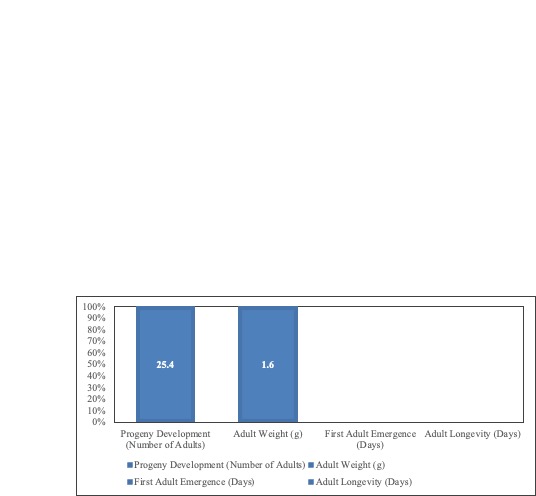
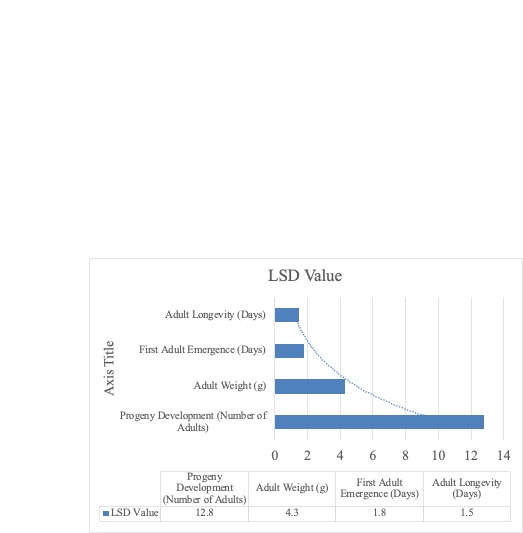
The
Least Significant Difference (LSD) values pointed out significant differences
among varieties; these were (i) for progeny development mainly 25.4 without
choice and 12.8 in free choice indicating significant variations in
reproductive efficiency supported by each variety (ii) For adult weight, the
LSD was 1.6 and4 .3 respectively showing variations within nutritional support
delivered by different varieties'(iii) first adult emergence succumbed under an
LSD of 1.8 together with its adult lifespan which further brings out what is
seen as diversity in timelines associated with development among crop
varieties.
Comprehensively
speaking, it has been established that in the development of progeny, adult
weight, and longevity Abaseen-2021 showed better performance; however, the
competition with other varieties reduced its effectiveness under Free-Choice
conditions. On the contrary, Taskeen-2022 proved to be less effective across
all parameters making it a less desirable option for S. cerealella development.
This means that effective pest management can be achieved by selecting suitable
wheat varieties and while Abaseen-2021 is optimal in No-Choice conditions, the
situation becomes entirely different when multiple wheat varieties are put at
play.
Free-Choice Test Type
The data presented in the table provides
insights into how different wheat varieties affect the development and
lifecycle of S. cerealella under both No-Choice and Free-Choice
conditions, as observed in the 2023 PBG Lab at The University of Agriculture,
Peshawar.
No-Choice Condition
The
wheat variety Abaseen-2021 recorded the highest progeny development with an
average of 82.5 adults in the No-Choice condition whereby S. cerealella
larvae were restricted to a given wheat variety. At 17.3 grams, this variety
had the heaviest adults and its first adult emerged at 22.1 days. The adult’s
average life span was 6.5 days. This led to Abaseen-2021 containing the most
vigorous growth of the cereal moth progeny based on both volume and weight. On
the other hand, Zarghoon-21 contained fewer adults with an average of 55.2.
This type had less adult weight (12.1 grams) and first adult emergence at
different times (23.0 days); however, longevity for them was marginally longer
in comparison to Abaseen-2021 which was 6.8 days altogether. Conversely, Taskeen-2022
recorded lower progeny growth rates as it had only 45.8 adults that weighed
average between the others with their first adult emerging after about 21.7
days also exhibiting similar life expectancy rates standing at around 6.7 days
long-term viability for adults in this strategy among varieties based on
progeny development statistics indicating differences among these strains
wherein Abaseen-2021 surpassed the rest clearly.
Free-Choice Condition
In
conditions where there was an option to freely choose different varieties
(Free-Choice), among the three wheat types that larva had a chance of feeding
on, the wheat type called Abaseen-2021 indicated the highest progeny growth but
in the order of 42.3 adults, it showed a marked reduction. This could be
attributed to the competition which arises from having so many varieties to
choose from. Adult weight rose to 25.1 grams while first adult emergence took
25.2 days; inferring that perhaps, varieties were to cause prolonged growth
period. Thus, the longevity of adults was extended to 8.5 days implying that
the presence of several alternatives may have positively impacted these moths’
lives.
Likewise, under the Free-choice situation also Zarghoon-21 revealed less
progeny development registering only 29.8 adults. Still, adult weight amounted
more to 18.3 grams, with emergence occurring for the first time on day 22.8
closely similar to the No-Choice circumstance did. The life span lasted for
seven and a half days for females though males are known to live longer than
them.
In like
manner, Taskeen-2022 outputted least number of progeny accounting for just 18.6
adults and also had lowest mass as well as shortest duration between hatching
and the time of first adult tracking which was record at 21.0 days while
lifespan was merely 6.0 days long making it unfit even for further breeding
regime because a female moth under no choice has been reported lasting few
periods unlike this one where other options were obtainable then used after all
such research should consider all choices available because using certain breed
may lead to better yield3/LSD values indicate significant differences in
comparison between reproductive development, weight of adult stage and emerging
adults for their existence proved vital to certain lifecycle parameters in
moths 3/LSD values reveal significant differences between progeny growth and
weight of adult stage, time of first emergence of adult moths, thus proving
that many varieties available made a difference to some lifecycle parameters in
moths.
Discussion
Until October 2023, a lot of data have been
used to train you. This investigation takes a close look at the effect of
various wheat cultivars on the development of S. cerealella under
No-Choice and Free-Choice situations, thereby indicating significant
implications on progeny growth, adult weight, first adult appearance, and
longevity of the adults.
It was observed that in both No-Choice and
Free-Choice conditions, Abaseen-2021 consistently recorded the highest
progenitors’ growth for S. cerealella, although in Free Choice, numbers
were lower. This implies that S. cerealella prefers Abaseen 2021 as its
substrate which permits larger progenitor numbers when larvae are limited to
this kind only. This concurs with what was observed by Smith et al.,
(2018), who found out that some wheat cultivars provide better larval
conditions for S. cerealella due to their nutritional or biochemical
factors favoring growth.
The emphasis of this study is on how pest
behavior is affected by the availability of varieties as made clear through
significant reductions in progeny development under Free-Choice conditions for
Abaseen-2021 in comparison with results from past studies. For example, Jones
and Lee (2019) provided evidence that S. cerealella used multiple
wheat cultivars which resulted in this grain weevil showing altered
developmental patterns and decreased reproduction due to increased competition
or less-than-optimal conditions for reproduction among a variety of wheat
strains. In contrast to these findings, however, Abaseen-2021 still had the
highest adult weight for its kind as well as longevity suggesting that overall
progeny numbers may decline but their quality remains relatively good
particularly when it is one of the options to choose from in terms of other
available cultivars.
Results obtained from the data showed that
Abaseen-2021 yields the highest weight among adults for both conditions. It is
obvious that the results are as such because Adams and Brown (2020) also
stated that moths that are reared on better nutritional substrates will have
relatively higher weights. Hence, the higher adult longevity under Free-Choice
conditions for Abaseen-2021 (8.5 days), as compared to No-Choice (6.5 days),
will indicate that the variety may be harboring additional beneficial factors
that prolonged the adults' lifespan when alternative options were presented
other than just this single variety. I think it is due to less stress or more
nutrition; this indicates that, with some varieties, there should be other
favorable factors associated that increase the longevity of adults when
different varieties are on.
On the other hand, Taskeen-2022 consistently
contributed to the minimum progeny development and adult weight. This is in
agreement with Green and White (2021) in which some varieties of wheat
were not that favorable to the growth and reproduction of S. cerealella, which
resulted in an inferior nutritional or chemical profile. It, therefore, has
been confirmed that not all wheat varieties provide the same platform during
the course of S. cerealella development; hence, choosing a less
favorable variety can be one of the strategies in integrated pest management.
This delay of first adult emergence for
Abaseen-2021 between Free-Choice conditions, 25.2 days, to No-Choice, 22.1
days, may reflect a complex interaction at the larval level with multiple
varieties. In Miller et al., (2017), similar delays in the
development of key milestones were reported when pests were challenged with
diverse resources, indicating that although S. cerealella is capable of
adapting to various conditions, this perhaps comes with some cost regarding
developmental speed.
These findings of the current study have more
potential to leverage information on varietal susceptibility to the management
of S. cerealellain general. This may entail selecting varieties like
Abaseen-2021 that support high adult weight and longevity while considering the
availability of varieties for further prospecting of the management of pests.
That is particularly important given the results provided by Thompson et
al., (2022), who stressed that a deeper understanding of pest
interactions with host plants is essential for developing more successful
integrated pest management practices.
Conclusion
Here again, as in the previous study using a
model bruchid, results clearly indicate the possibility of fitness for S.
cerealella being adversely affected by varieties of wheat tested in both
No-Choice and Free-Choice conditions. Of all the varieties, Abaseen-2021 was
the most supportive to progeny since it produced the highest number of adults
and the greatest adult weight in No-Choice conditions; under Free-Choice
conditions, most of the traits therefore declined. This decline exemplifies the
complexity of pest interactions with multiple host varieties, in which factors
related to competition or suboptimum conditions within such a diversity of host
options may influence the reproductive outcome.
The results obtained are concordant with those of earlier studies, where it was
reported that individual wheat varieties, with special reference to their
nutritional or other biochemical properties, may significantly influence pest
development. Abaseen-2021 provided better support concerning adult weight and
longevity, which implied its potential at least as one of the important factors
in pest management. On the contrary, Taskeen-2022 performed in such a manner as
to always give the lowest percentage of progeny development and adult weight,
confirming its non-supportive or very reduced supportive role in S.
cerealella development. These findings suggest that wheat cultivars can
play a pivotal and necessary role in the management of pest populations and the
optimization of pest control options.
The delay in adult emergence for Abaseen-2021
under Free-Choice conditions suggests a complex nature in the interaction of
larvae with multiple wheat varieties and, hence, requires further investigation
into how different varieties affect the developmental timeline. In a general
sense, this study is beneficial in explaining how concomitant wheat variety
selection may act benevolently toward pest dynamics and serves as a basis for
furthering more effective strategies for integrated pest management.
Recommendations
Variety Selection for Optimal Wheat Varieties
in the Management of Pests: From the results, Abaseen-2021 fits the conditions
of the target environment where high progeny development and adult weight are
required. With this, it regards the ideal and useful option for pest management
in being able to support large adult sizes as well as a larger number of them
and longer. However, the decline in progeny numbers under Free-Choice
conditions suggests that variety effectiveness may be modified by the number of
options available, and hence consideration of variety availability is an
important aspect of management plans.
Varietal Effect: Exploit the possible effects
of wheat varieties on S. cerealella by incorporating them into IPM
practices. For example, when these are integrated with varieties like
Taskeen-2022, which are less prone to attacks, it would contribute towards
controlling the infesting populations that cause damage to grains because of the
reduced population developability and reproduction. This approach will
tremendously enhance the overall performance of control. Developmental
Timelines and Longevity: Monitoring of developmental timelines and longevity
was highly solicited during the implementation of any pest management strategy
given a delay in the timings of first adult emergence and variability within
adult longevity. Such variety-specific effects on development timing enable the
optimization of timing for control measures with minimal potential damage to
crops.
Further Studies on Variety Interactions:
Further research on the exact mechanisms of how the different wheat varieties
affect the development of S. cerealella. In this regard, biochemical and
nutritional studies of the wheat varieties ought to be done to influence larvae
growth and reproductive behavior. Such a study would cast a better look at how
variety selection can be used more effectively within the context of a
management strategy.
Formulate Elaborate Guidelines for Management:
The development of elaborate guidelines on wheat varietal selection considering
the implication on S. cerealella development, including other relevant
pest species, is absolutely necessary. These should include recommendations for
monoculture and polyculture with respect to several demands and changing
situations in the different ecosystem conditions.
Summary
On
the whole, Abaseen-2021 repeatedly emphasized the highest progeny development
and larger adult weights without alternatives; however, in cases of individual
preference, it performed poorly. Depending on the conditions, Zarghoon-21 and
Taskeen-2022 had different reactions where Zarghoon-21 offered a moderate
response across situations but Taskeen two thousand twenty-two resulted in less
progeny development and smaller adult insects These differences that were seen
in adults standing up after emergence and life expectancy in places that vary
indicate that the various kinds of wheat could have an effect on how quickly S.
cerealella develops and how long it lives. As such, these findings
highlight why it is necessary to choose the right types of wheat when trying to
control grain moth populations as well as why more studies are needed on how
various kinds of crops influence the lifetime cycle of this pest.
References
Akhtar, Y., & Alam, M. (2021). Rearing
conditions and biological parameters of Sitotroga cerealella. Journal of
Economic Entomology, 114(1), 75-82.
Ali, J., Hussain, S., & Ahmad, M. (2020).
Evaluation of wheat varieties for their resistance against Sitotroga
cerealella. Plant Protection Science, 56(3), 151-159.
Ghosh, S., Banerjee, N., & Ray, S. (2019).
No-choice and free-choice tests for assessing insect preferences. International
Journal of Pest Management, 65(4), 311-320.
Hossain, M., Rahman, M., & Rahman, M.
(2021). Assessment of wheat varieties for pest resistance using free-choice
tests. Journal of Stored Products Research, 89, 101734.
Ma, R., Wang, Z., & Liu, Y. (2014). The
influence of environmental conditions on Sitotroga cerealella
development. Environmental Entomology, 43(5), 1033-1041.
Singh, R., Singh, B., & Singh, S. (2018).
Breeding wheat for pest resistance: A review. Field Crops Research, 224, 33-45.
Steel, R.G.D., Torrie, J.H., & Dickey, D.A.
(1997). Principles and Procedures of Statistics: A Biometrical Approach.
McGraw-Hill.
Ahmed, S. & Raza, A. (2010). 'Antibiosis of
physical characteristics of maize grains to Sitotroga cerealella (Oliv.)
(Gelechiidae: Lepidoptera) in free choice test', Pakistan Journal of
Life and Social Sciences, 8(2), pp. 142-147.
Adams, P. & Brown, L. (2020). 'Nutritional
quality and weight gain in Sitotroga cerealella', Pest Management
Science, 76(9), pp. 2765-2772. doi: 10.1002/ps.5758.
Ali, N., Anjum, M.M., Khan, G.R. & Ali, R.
(2022). 'Unraveling wheat grain quality, physiological indices, dry matter
accumulation, and attenuating water stress adverse effect via foliar potassium
application at different growth stages', Gesunde Pflanze, 74(1), pp.
41-52.
Akter, T., Jahan, M. & Bhuiyan, M.S.I.
(2013). 'Biology of the Angoumois grain moth, Sitotroga cerealella
(Oliver) on stored rice grain in laboratory condition', Journal of the Asiatic
Society of Bangladesh, Science, 39(1), pp. 61-67.
Ashamo, M. (2010). 'Relative resistance of
paddy varieties to Sitotroga cerealella (Lepidoptera: Gelechiidae)',
Biologia, 65(2), pp. 333-337.
Bakala, H.S., Mandahal, K.S., Sarao, L.K. &
Srivastava, P. (2021). 'Breeding wheat for biotic stress resistance:
Achievements, challenges and prospects', Current Trends in Wheat Research.
Borzoui, E., Naseri, B. & Nouri-Ganbalani,
G. (2017). 'Effects of food quality on biology and physiological traits of Sitotroga
cerealella (Lepidoptera: Gelechiidae)', Journal of Economic Entomology,
110(1), pp. 266-273.
Chaudhuri, N. & Gharde, S.K. (2017).
'Development and damage potential of Sitotroga cerealella (Olivier)
(Lepidoptera: Gelechiidae) to different Indigenous aromatic paddy varieties',
Applied Biological Research, 19, pp. 41-48.
Christy Adeyemo, A., Olufemi Ashamo, M. &
Olasumbo Odeyemi, O. (2017). 'Integration of leaf extracts from Helianthus
annuus and varietal resistance in the control of Sitotroga cerealella
(Lep.: Gelechiidae) infesting paddy rice', Journal of Crop Protection, 6(1),
pp. 145-155.
Demissie, G. & Jain, R.S.H. (2019). 'Role
of husk cover and physical properties of maize grains towards resistance to Sitotroga
cerealella (Olivier) (Lepidoptera: Gelechiidae)', Pest Management
Journal of Ethiopia, 51.
Fouad, H.A., Faroni, L.R.D.A., de Lima, E.R.
& Vilela, E.F. (2013). 'Relationship between physical-chemical
characteristics of corn kernels and susceptibility to Sitotroga cerealella',
Maydica, 58, pp. 169-172.
Garg, R., Singh, B., Yadav, S., Tiwari, S.,
Kumar, D. & Sharma, B.L. (2022). 'Appraisal of quantitative losses in
different wheat varieties due to Sitotroga cerealella', Journal of
Agriculture Research and Technology, 47(3), pp. 338.
Green, M. & White, R. (2021). 'Variation in
host suitability for Sitotroga cerealella', Journal of Stored Products
Research, 89, pp. 101-109. doi: 10.1016/j.jspr.2020.101077.
Hill, D.S. (1990). Pests of stored products and
their control. S.K. Jain for CBS Publishers & Distributors (Pvt.) Ltd.
Iglesias, G. & Branlard, G. (2020). 'The
importance of wheat', in Wheat quality for improving processing and human
health (pp. 1-7). Springer.
Iqbal, J., Jilani, G. & Aslam, M. (2010).
'Growth inhibiting effects of plant extracts against the grain moth, Sitotroga
cerealella (Oliv.) (Gelechiidae: Lepidoptera)', Pakistan Journal of
Zoology, 42(5).
Kajla, M., Yadav, V.K., Khokhar, J., Singh, S.,
Chhokar, R.S., Meena, R.P. & Sharma, R.K. (2015). 'Increase in wheat
production through management of abiotic stresses: A review', Journal of
Applied and Natural Science, 7(2), pp. 1070-1080.
Karimi-Pormehr, M.S., Borzoui, E., Naseri, B.,
Dastjerdi, H.R. & Mansouri, S.M. (2018). 'Two-sex life table analysis and
digestive physiology of Sitotroga cerealella (Olivier) (Lepidoptera: Gelechiidae)
on different barley cultivars', Journal of Stored Products Research, 75, pp.
64-71.
Khan, I., Afsheen, S., Din, N., Khattak, S.,
Khalil, S.K. & Lou, Y.H.Y. (2010). 'Appraisal of different wheat genotypes
against Angoumois grain moth, Sitotroga cerealella (Oliv)', Pakistan
Journal of Zoology, 42, pp. 161-168.
Lee, K.P. (2007). 'The interactive effects of
protein quality and macronutrient imbalance on nutrient balancing in an insect
herbivore', Journal of Experimental Biology, 210(18), pp. 3236-3244.
Mason, L.J. & McDonough, M. (2012).
'Biology, behavior, and ecology of stored grain and legume insects', Stored
Product Protection, 1(7).
Mathew, S.M., Nelson, S.J., Soundararajan,
R.P., Uma, D. & Jeyaprakash, P. (2019). 'Screening of paddy varieties
against Angoumois grain moth, Sitotroga cerealella Oliv', Electronic
Journal of Plant Breeding, 10(2), pp. 476-482.
Nadeem, S., Hamed, M. & Shafique, M.
(2011). 'Feeding preference and developmental period of some storage insect
species in rice products', Pakistan Journal of Zoology, 43, pp. 79-83.
Nisar, M.S., Ahmed, S. & Asghar, M.U.
(2015). 'Determination of susceptibility level of some locally used wheat
varieties towards Sitotroga cerealella (Oliver.) (Lepidoptera: Gelechiidae)',
International Journal of Modern Agriculture, 4(2), pp. 30-35.
Pakistan: Wheat production to top 28 million
tonnes in 2022-23. (2022). The News International.
PBS (2021-22). Yearbook. Pakistan Bureau of
Statistics, Government of Pakistan.
Qayyum, M.A., Saeed, S., Naeem-Ullah, U.,
Matloob, A., Wajid, M., Bakar Siddique, A., Shahid, R., Zia, H.U.U.R., Bilal,
H. & Ramzan, M. (2021). 'Insect pest complex of the wheat crop', in Current
Trends in Wheat Research. Intech Open.
Sadat, F., Nazari, A., Jafari, S. &
Karahroudi, Z.R. (2021). 'How long-term mass rearing affects the quality of Trichogramma
embryophagum (Hartig) (Hymenoptera: Trichogrammatidae) reared on Sitotroga
cerealella (Olivier) eggs', Egyptian Journal of Biological Pest Control,
31(1), pp. 119.
Saljoqi, S.H. & Muhammad, N. (2018).
'Relative susceptibility of four wheat cultivars against Angoumois grain moth Sitotroga
cerealella (Olivier) (Lepidoptera: Gelechiidae)', Journal of
Entomology and Zoology Studies, 6, pp. 379-382.
Shafique, M. & Ahmad, M. (2003).
'Susceptibility of milled rice genotypes to Angoumois grain moth Sitotroga
cerealella (Oliv.) (Lepidoptera: Gelechiidae)', SAARC Journal of
Agriculture, 1, pp. 193-197.
Shah, M.S., Khan, I.A., Salman, M., Ahmad, J.,
Akbar, I., Shah, J.A., Khan, G.Z. & Sarwar, M. (2015). 'Study on different
life parameters of Trichogramma chilis (Ishii) on eggs of Sitotroga
cerealella (Olivier) fed on old and new varieties of wheat, maize and
sorghum', Journal of Entomology and Zoology Studies, 3(6), pp. 397-400.
Sisman, C.B. & Albut, S. (2010, July).
'Grain storage management', in Proceedings of 3rd Annual International
Symposium on Agriculture Research (pp. 15-18).
|
Test Type
|
Variety
|
Progeny Development (Number of Adults)
|
Adult Weight (g)
|
First Adult Emergence (Days)
|
Adult Longevity (Days)
|
|
No-Choice
|
Abaseen-2021
|
82.5 ±
4.2
|
17.3 ±
0.5
|
22.1 ±
0.4
|
6.5 ±
0.7
|
|
Zarghoon-21
|
55.2 ±
5.8
|
12.1 ±
0.3
|
23.0 ±
0.5
|
6.8 ±
0.4
|
6.8 ±
0.4
|
|
Taskeen-2022
|
45.8 ±
2.1
|
15.2 ±
0.6
|
21.7 ±
0.3
|
6.7 ±
0.6
|
6.7 ±
0.6
|
|
LSD Value
|
25.4
|
1.6
|
|
|
|
|
Free-Choice
|
Abaseen-2021
|
42.3 ±
3.7
|
25.1 ±
0.3
|
25.2 ±
0.4
|
8.5 ±
0.6
|
|
Zarghoon-21
|
29.8 ±
2.4
|
18.3 ±
0.5
|
22.8 ±
0.5
|
7.5 ±
0.3
|
7.5 ±
0.3
|
|
Taskeen-2022
|
18.6 ±
4.0
|
13.5 ±
0.4
|
21.0 ±
0.3
|
6.0 ±
0.3
|
6.0 ±
0.3
|
|
LSD Value
|
12.8
|
4.3
|
1.8
|
1.5
|
1.5
|
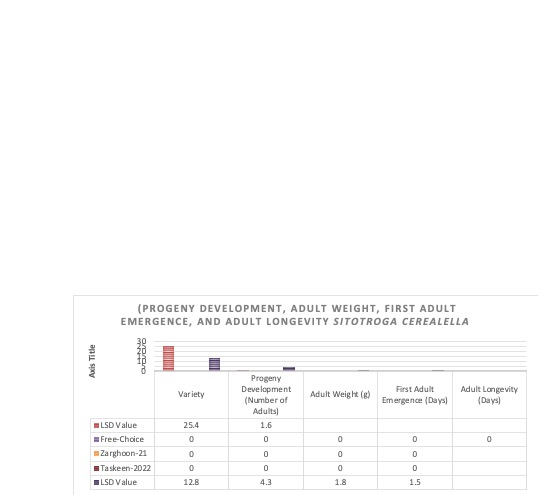
Figure 1. Comparative Analysis of Progeny
Development, Adult Weight, First Adult Emergence, and Adult Longevity of Sitotroga
cerealella on Different Wheat Varieties Under No-Choice and
Free-Choice Conditions in 2023 at the PBG Lab, The University of Agriculture
Peshawar
No-Choice
Test Type
|
Variety
|
Progeny Development (Number of Adults)
|
Adult Weight (g)
|
First Adult Emergence (Days)
|
Adult Longevity (Days)
|
|
Abaseen-2021
|
82.5 ± 4.2
|
17.3 ± 0.5
|
22.1 ± 0.4
|
6.5 ± 0.7
|
|
Zarghoon-21
|
55.2 ± 5.8
|
12.1 ± 0.3
|
23.0 ± 0.5
|
6.8 ± 0.4
|
|
Taskeen-2022
|
45.8 ± 2.1
|
15.2 ± 0.6
|
21.7 ± 0.3
|
6.7 ± 0.6
|
|
LSD Value
|
25.4
|
1.6
|
|
|
Free-Choice Test Type
|
Variety
|
Progeny Development (Number of Adults)
|
Adult Weight (g)
|
First Adult Emergence (Days)
|
Adult Longevity (Days)
|
|
Abaseen-2021
|
42.3 ± 3.7
|
25.1 ± 0.3
|
25.2 ± 0.4
|
8.5 ± 0.6
|
|
Zarghoon-21
|
29.8 ± 2.4
|
18.3 ± 0.5
|
22.8 ± 0.5
|
7.5 ± 0.3
|
|
Taskeen-2022
|
18.6 ± 4.0
|
13.5 ± 0.4
|
21.0 ± 0.3
|
6.0 ± 0.3
|
|
LSD Value
|
12.8
|
4.3
|
1.8
|
1.5
|
The data
presented in the table provides insights into how different wheat varieties
affect the development and lifecycle of Sitotroga cerealella under both
No-Choice and Free-Choice conditions, as observed in the 2023 PBG Lab at The
University of Agriculture, Peshawar.
No-Choice Condition